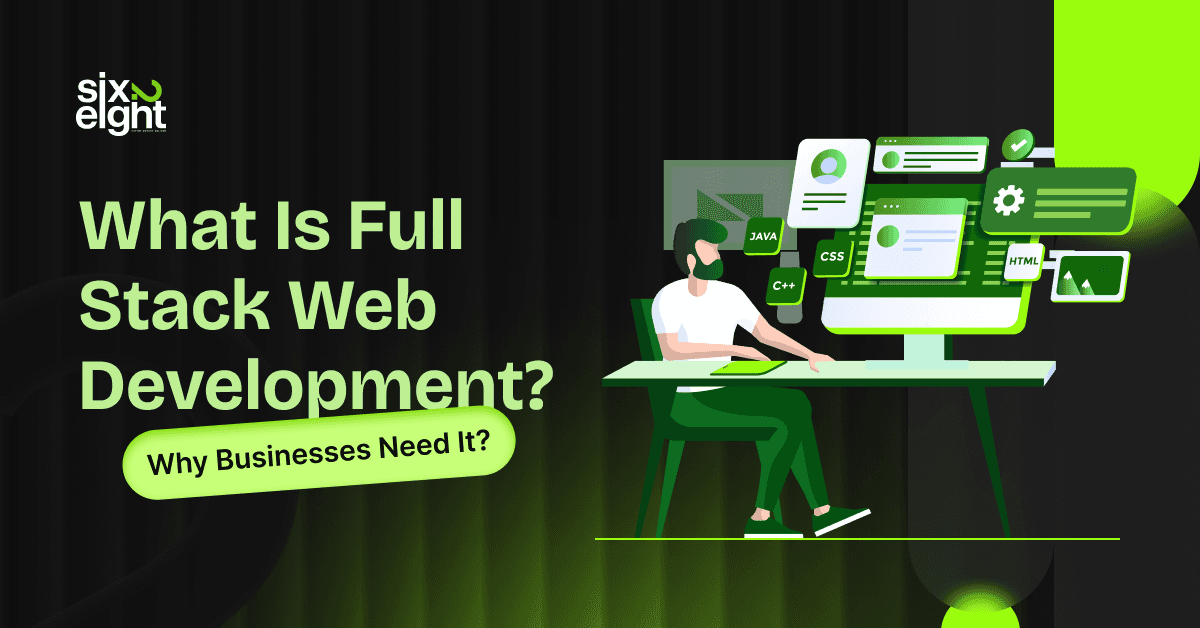
If you’re still asking what is full-stack development and why businesses need full-stack web development, you’re not alone. As digital demand explodes across industries, more businesses are betting on full-stack development to build faster, smarter, and more scalable products, without draining time or money.
At its core, full-stack web development means handling both the front-end (what users see) and the back-end (how everything works behind the scenes). Instead of hiring two separate teams, you get one expert who connects the dots from the user interface to the database. It’s like hiring a builder who designs, lays the bricks, and wires the electricity.
This approach isn’t just trendy. It’s strategic. You move faster. You fix bugs quicker. You cut down costs. And you launch with confidence. Whether you run a startup, a SaaS product, or a growing retail brand, full-stack development helps you do more with less.
Let’s break down exactly why full stack is important in web development and what makes it valuable across different industries.
What Is Full Stack Web Development?
Full-stack web development is the process of building both the frontend and backend of a web application. You get to handle everything from how a site looks and feels to how it works under the hood. That means you’re developing the user interface, writing server-side logic, and managing the database all in one workflow.
Here’s a breakdown of the key elements involved in full-stack web development:

Frontend Development: The User-Facing Side
Frontend development focuses on building the interface that users see and interact with. You use HTML, CSS, and JavaScript to bring websites to life. Modern frameworks like React, Vue.js, or Angular make the work faster, more modular, and scalable.
This layer is all about visuals, responsiveness, accessibility, and user experience. If a site looks good and feels fast, thank the frontend stack.
Backend Development: The Engine Behind the Scenes
Backend development handles everything users don’t see. You write logic that processes user requests, manages data, and delivers responses. Frameworks like Node.js, Django, Laravel, or Ruby on Rails are popular in this space. You also set up APIs that connect the frontend to your server. If your app can register users, store data, or send emails, the backend is doing its job.
Database Management: Storing and Retrieving Data
Full-stack development also includes managing databases where your application’s data lives. You work with relational databases like MySQL and PostgreSQL or NoSQL databases like MongoDB and Redis.
Good database architecture ensures fast performance and reliable data handling. This part also involves building schemas, writing queries, and optimizing data flow for better app functionality.
DevOps and Deployment: Pushing Your App to the World
Once your app is ready, you need to deploy it. Full-stack developers often handle DevOps tasks like using Git for version control, Docker for containerization, and AWS or Google Cloud for hosting.
You also set up continuous integration and deployment pipelines to automate your workflow. This ensures you can ship features quickly and fix bugs without downtime.
Key Features For Full Stack Development
Full-stack development brings major advantages that boost your development speed and team efficiency. Here’s why it matters:
- You can work on both frontend and backend, saving time on handovers
- It reduces hiring needs, which cuts down your project costs
- You can build MVPs faster by working across the full stack
- You get the flexibility to shift tasks based on the project phase
- You solve problems faster with a full view of the system
- You improve team collaboration by bridging tech and design
These features are especially helpful for startups, product teams, and agile companies that need fast, end-to-end execution.
Popular Technologies in Full-Stack Web Development
You won’t be working in a vacuum. Here are the most-used tools across full-stack roles:
- Frontend: HTML, CSS, JavaScript, React, Vue.js, Angular.
- Backend: Node.js, Express.js, Django, Ruby on Rails, Laravel.
- Databases: MongoDB, MySQL, PostgreSQL, Redis.
- DevOps Tools: Git, Docker, Jenkins, AWS, Google Cloud.
Knowing when and how to use these tools helps you stay competitive and efficient.

Why Businesses Need Full-Stack Web Development?
Full-stack web development gives your business a complete solution from building intuitive front-end interfaces to managing secure back-end logic. You get faster delivery, smoother workflows, and better performance without juggling multiple teams.
This approach is not just efficient; it’s essential for staying competitive in a fast-moving digital world. Here’s why full-stack web development matters for your business:

Efficient Development
Full-stack developers handle everything from UI design to server logic within one workflow. That means you don’t need two separate teams talking through specs for every feature. This setup speeds up delivery, reduces delays, and ensures smoother collaboration.
When one developer or team owns both sides of the app, things move faster and stay more consistent. For businesses trying to ship products quickly or work on tight deadlines, full-stack makes the entire development cycle more efficient.
Flexibility and Agility
With full-stack expertise, your team can shift priorities and adapt features on the fly. You don’t have to wait for front-end and back-end developers to sync up every time changes are needed.
Full-stack development lets you test, tweak, and deploy faster, especially useful when responding to market changes or user feedback. This flexibility is a huge advantage for startups and growing businesses that need to move quickly without breaking things.
Cost-Effectiveness
Hiring one full-stack developer or a full-stack team reduces your overall development cost. You don’t have to manage two separate teams, which means fewer meetings, fewer tools, and less project overhead. This cost savings doesn’t come at the expense of quality either.
Full-stack developers are trained to think holistically, so the product is still high-performing, user-friendly, and scalable. For budget-conscious businesses, full-stack is the most cost-effective approach to web development.
End-to-End Ownership
When one team builds the entire system, from the interface to the database, you get better accountability. There’s no blaming “the other side” when bugs pop up. Full-stack teams own the full product experience.
This ownership results in stronger product alignment, better design execution, and easier future updates. Businesses benefit from having a single point of contact that deeply understands the entire architecture.
Better Problem Solving
Full-stack developers are skilled in both front-end and back-end logic. That means they can identify issues across the entire codebase, not just one part. Whether it’s a layout bug or a database glitch, they’re equipped to debug fast and implement fixes without delay.
For businesses, this means less downtime, quicker iterations, and stronger product stability, all without having to escalate issues across multiple teams.
Enhanced User Experience
With control over both design and function, full-stack developers can build seamless, high-performing user interfaces that connect smoothly to the back-end. This results in faster load times, more responsive interactions, and consistent design across all devices.
Businesses that prioritize user experience will benefit from the tight integration and optimization that full-stack development makes possible.
Scalability
Full-stack systems are easier to scale because they’re built with consistency and structure across the stack. Your team understands every layer of the app, so adding new features, supporting more users, or integrating third-party tools becomes easier.
For businesses preparing for growth, full-stack offers a strong technical foundation that’s built to evolve with you.
Faster Prototyping
If you’re launching a new product or MVP, full-stack allows you to move from idea to execution much faster. Developers can quickly set up databases, build user interfaces, and launch core features without depending on different departments.
That’s crucial when testing ideas or seeking investment. The faster you ship, the faster you can learn, and full-stack makes that speed possible.
Some FAQs
Why startups need full-stack web development?
Startups need full-stack web development to move fast without hiring separate frontend and backend teams. It cuts costs and time. One team builds, tests, and deploys everything together. That means fewer meetings, fewer blockers, and faster MVP launches.
You can pivot features without dealing with cross-team confusion. Full-stack devs understand the whole picture, so product changes feel smoother. When every second counts, having one skilled crew handling the stack helps you stay ahead.
Why SaaS companies need full-stack web development?
SaaS companies need full-stack web development to build cohesive experiences across user-facing features and backend services. It avoids misalignment between design and data flow. Your devs handle everything from UI logic to backend performance.
That speeds up iterations and helps you ship updates faster. Full-stack teams reduce bugs caused by miscommunication. They make product scaling easier and upgrades safer. With fewer silos, your platform evolves faster and feels more reliable to users.
Why agencies need full-stack web development?
Agencies need full-stack web development to deliver end-to-end digital solutions without relying on separate teams. Each client project runs smoother. Full-stack developers switch between CMS builds, app dashboards, and integrations. That gives you flexibility and fewer delays.
They reduce the need for juggling handoffs and managing multiple timelines. Clients get consistent results across the stack. It also boosts internal efficiency and reduces overhead. One well-rounded team makes client delivery feel less chaotic.
Why retail brands need full-stack web development?
Retail brands need full-stack web development to deliver seamless shopping experiences across web and mobile. You want speed and stability. Full-stack devs handle everything from user interface to checkout systems. That means fewer bugs and faster updates.
They also optimize performance for better conversions. Real-time inventory and smooth UX build customer trust. With fewer tech gaps, you avoid lost revenue from cart issues or slow load times. Full-stack makes shopping feel effortless.
Why finance companies need full-stack web development?
Finance companies need full-stack web development to maintain performance while keeping user data secure and compliant. One team handles both ends. That means faster fixes, clearer communication, and less risk. Full-stack developers understand both user flows and backend logic.
They build secure, streamlined platforms without silos. Your systems get stronger, and audits become less painful. A single, skilled team avoids duplication and lowers downtime. You also scale faster with consistent security protocols.
Why healthcare platforms need full-stack web development?
Healthcare platforms need full-stack web development to create user-friendly, compliant, and scalable systems. Patient safety and performance matter. Full-stack devs handle both HIPAA-compliant storage and clean interfaces. This reduces handoff errors and boosts efficiency.
One team ensures that features like appointment booking and data storage work together. It helps you launch updates faster without breaking things. You also gain flexibility to respond to new regulations or tech. Patients get better digital care experiences.
Why education companies need full-stack web development?
Education companies need full-stack web development to support interactive, scalable, and reliable learning experiences. Users expect more than video uploads. Full-stack teams build dashboards, quizzes, and real-time updates in one flow.
That means less lag and better engagement. You can roll out features across devices without breaking the experience. One dev team avoids knowledge silos. They also support faster troubleshooting and smarter updates. Education feels more connected and impactful for learners and teachers.
Why logistics companies need full-stack web development?
Logistics companies need full-stack web development to power real-time systems and improve delivery tracking. Everything runs on timing. Full-stack teams sync frontend dashboards with backend operations. That means live updates, faster workflows, and better data handling. You avoid delays from API misfires or system gaps.
Full-stack development helps automate routes, manage inventory, and streamline communication. Fewer errors lead to fewer delays. Your customers see faster deliveries and smarter support.
Why media platforms need full-stack web development?
Media platforms need full-stack web development to manage traffic, speed, and dynamic content delivery. Performance affects everything. Full-stack teams optimize front-end visuals and backend processing together. They build faster load times and cleaner user journeys.
Your content stays sharp on every device. You reduce bounce rates by improving responsiveness. Full-stack also helps manage live streaming, storage, and analytics from one place. The result is smoother publishing and a better viewer experience.
Why enterprise businesses need full-stack web development?
Enterprise businesses need full-stack web development to modernize systems and reduce internal complexity. Large teams struggle with silos. Full-stack development connects everything into one clear workflow. Devs understand frontend tools and backend systems equally.
That makes digital transformation smoother and faster. You reduce costs by managing fewer vendors. New features roll out faster and safer. Teams get more control, and business goals sync better with your tech. The result is progress without the chaos.
What Are the Benefits of Full-Stack Development?
Full-stack development gives you speed, control, and flexibility without the usual headaches of managing multiple teams. You get both the frontend experience and backend logic handled by one tight-knit group. That means faster launches, better collaboration, and fewer bugs.
Whether you’re building a quick MVP or scaling a complex product, full-stack development helps you save time, cut costs, and stay adaptable, all while improving how your product works and feels.

Ship features faster with better UI and backend consistency
Full-stack development removes the gap between frontend and backend updates. Your features get released quicker and more smoothly. One team handles design logic and database structure together.
That avoids delays and last-minute bugs. It also keeps UX consistent and performance steady. You don’t waste time syncing two teams. Your product feels sharper because everything is built with the full user flow in mind.
Save money by cutting down on extra hires and overhead
With full-stack developers, you don’t need to hire two different teams. That cuts payroll and project costs fast. One skilled team does the job of many. You also save time on coordination and handoffs. Less team bloat means better communication and faster execution. You can scale up or down without a hiring crisis. This lean setup helps you build more with less.
Build MVPs faster with smaller teams and fewer blockers
When speed matters, full-stack development gives you a serious edge. One person can take a feature from concept to launch. That’s gold for startups and early-stage teams. You skip the back-and-forth between frontend and backend.
Fewer cooks, fewer delays. It’s easier to test ideas, pivot fast, and push updates. Your MVP hits the market quicker without compromising quality.
Improve product quality with fewer bugs and cleaner code
Full-stack developers see how every layer of your app connects. That means fewer disconnects and technical surprises. Bugs get caught earlier because they understand both ends. You avoid miscommunication between frontend and backend specialists.
Full-stack devs know how to make clean, maintainable code. Your app runs smoother and is easier to update later.
Keep teams flexible and ready for last-minute changes
Full-stack development helps you adapt fast when priorities shift. Developers can update both sides without waiting for another team. That keeps your roadmap moving even when plans change.
You save time every sprint. Product owners get more control over updates. Teams stay lean and responsive under pressure. Flexibility like this gives you a big advantage in fast-moving markets.
Reduce project delays and communication breakdowns
One of the biggest causes of delay is poor communication between teams. Full-stack developers remove that barrier completely. They handle the whole stack, so there’s no need for translation.
Everyone stays on the same page from day one. Updates get pushed without confusion or bottlenecks. You move faster and break fewer things along the way.
Speed up prototyping with complete ownership
Want to test a new feature this week? A full-stack team can build it from start to finish. No waiting on another department. That means your prototypes are real, working products, not just static mockups.
You save time and reduce dependencies. It’s easier to get stakeholder feedback early. Full-stack ownership helps your team learn, iterate, and improve quicker.
Scale products faster with smarter architecture
Full-stack developers build systems that grow with your business. They know what needs to be flexible from the start. You won’t hit tech walls every time your user base grows. Features get added without wrecking your infrastructure. Your app can evolve smoothly without constant rewrites. Scalability becomes a strength, not a problem.
Make ongoing maintenance simpler and faster
Updates and fixes are quicker when the same team built the whole product. Full-stack devs know how the backend affects the UI. That makes debugging faster and upgrades safer. You reduce downtime and avoid messy rework. Maintenance becomes less painful. Your team can stay focused on new growth instead of old problems.
What to Consider When Choosing Full-Stack Web Development?
When you’re choosing full-stack web development, you’re not just picking a service. You’re betting on speed, scalability, and long-term results. Let’s break down the must-check boxes before you shake hands with any dev team.
Hire Industry-Proven Developers
A team with experience in your industry gets your workflow, pain points, and user behavior. That means less back and forth and more smart solutions from day one. If you’re in healthcare, look for HIPAA-compliant builds.
If you’re in retail, find developers with POS integrations under their belt. Review their past work, not just by size, but by how closely it mirrors your challenges. Proven experience builds confidence and avoids rookie mistakes.
Check Their Tech Stack
Full-stack isn’t just about knowing a bunch of tools. It’s about choosing the right ones for your use case. If you’re building real-time dashboards, your devs better know Node.js and MongoDB. For content-heavy apps, look for Next.js or Nuxt support.
Ask about their frontend and backend strengths and how they make decisions on what tools to use. Your stack should serve both current features and future upgrades.
Go for Full Lifecycle Skills
A solid full-stack developer covers both the surface and the engine room. They manage UI and UX, server logic, databases, APIs, and deployment. This helps streamline communication, speed up sprints, and avoid broken integrations.
You shouldn’t need five people to build one login screen. Ask if they’ve built complete systems on their own and how they manage full lifecycle development. That’s how you ensure quality from start to finish.
Prioritize Scalability and Flexibility
Generic templates won’t help if your business grows fast or pivots often. Full-stack teams should tailor systems around your data flow, users, and backend logic. Make sure the codebase can evolve without constant rebuilds. For SaaS startups, this means modular architecture.
For B2B platforms, it means API first builds. Ask them how they’ve scaled previous projects and what fail-safes they implement.
Focus on Clear Communication
Poor communication delays launches, bloats the scope, and wastes money. You want a team that checks in often, gives updates without being asked, and listens when you bring feedback. Ask how they manage sprints, reports, and issue tracking. A solid dev team should feel like part of your internal crew, not a black box that vanishes for two weeks.
Prioritize Testing and Security
Your product shouldn’t go live with security holes or surprise bugs. Full-stack developers must use secure coding practices, run tests often, and stay updated on compliance needs. This matters more in fields like fintech, healthcare, and SaaS.
Ask if they’ve worked with GDPR, HIPAA, or SOC 2 environments. Testing should include unit tests, integration tests, and real user simulation.
Look for Real Testimonials
A polished portfolio is great, but real feedback says more. Ask previous clients about delivery time, communication, and post-launch support. Look for details in testimonials like how they handled scope creep or tight deadlines. Real-world proof gives you more confidence than promises in a pitch deck.
Understand the Cost Structure
You shouldn’t just chase the cheapest quote. You need clarity on what you’re paying for and what happens if the scope changes. Make sure their cost structure matches your needs. Fixed cost for MVPs or hourly for ongoing projects. Ask what’s included. Is QA, hosting, or maintenance extra? A transparent quote beats a vague estimate every time.
By checking off each of these factors, you’ll avoid future headaches and pick a full-stack dev partner who can actually deliver. Think long term, not just fast launch. Your users and your stress levels will thank you.
Wrap Up
Full-stack web development isn’t just a buzzword. It’s how smart businesses build fast, scale easily, and stay flexible without doubling their budget. From design to deployment, one expert team can manage it all clean code, smooth UX, and rock-solid backend logic.
Whether you’re launching an MVP or upgrading a product, this approach keeps your team lean and your progress fast. It’s the no-nonsense, results-first way to turn ideas into digital products that actually work. If you’re serious about growth, full-stack is the way to go.